 |
| America - Chinese Made |
Who produces goods for the U.S. market and where?
As we observed in "Mardi Gras," the majority of goods sold in the US market are made pretty much anywhere but the US. Many of our products are made in China, or some other Asian country by workers likely being paid far too little for the work they are doing.
Why do more and more U.S. companies manufacture and source products overseas, and why do U.S. consumers purchase these products?
US companies manufacture products overseas primarily to cut costs. As we saw in "Mardi Gras," the owners of the bead company claimed that US workers were simply too costly to meet the demands that US consumers have. Because we've come to expect a certain low price on many products, we've created a market where US companies have little choice but to outsource labor to somewhere that is willing to be paid far less than they ought to. We buy these products mostly because we don't actually care about where they come from. As in the documentary, many people were obviously bothered by the facts of where their beads came from, but none of the party-goers actually cared enough to give more than a few moments thought to the issue.
What are the working conditions at foreign factories producing goods for the U.S. market?
In a word, bad. Many factories in foreign countries are poorly maintained, allowing the workers only the comforts they absolutely need to make them stay employed. The bead factory in the documentary was reminiscent of a terrible summer camp to be honest, and the factory floor was obviously terrible for the workers' health.
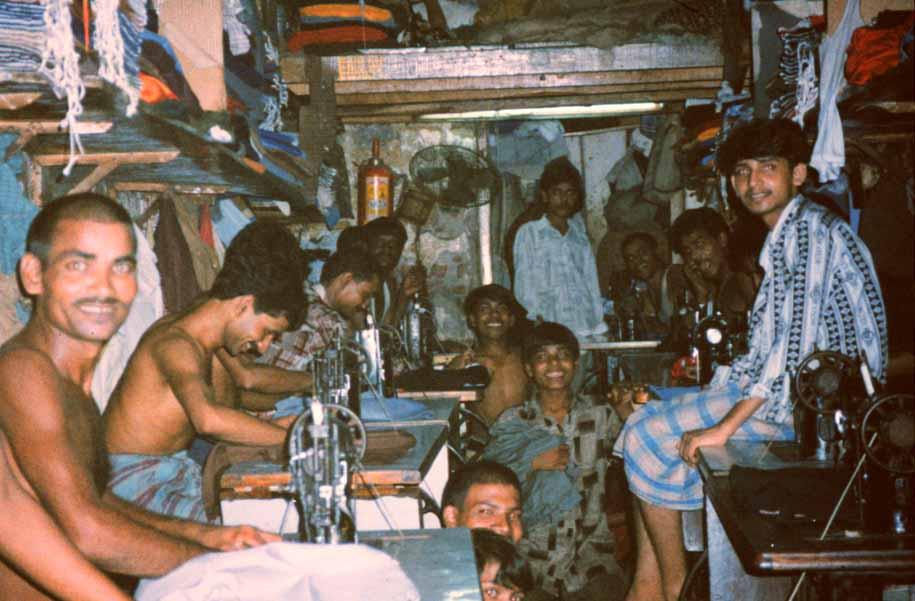 |
| Don't they look so happy? |
Why do factory workers in foreign factories work under the current conditions?
Most of the time it is because they have little choice. Especially in Asian countries, if you cannot make it in school you have pretty much no future in a decent-paying job, and often times families cannot afford to put more than one of their children through a good school. Many workers at these factories are teens who were either fed up with school life and wanting to work, or come from poor families who were unable to put them through school for one reason or another. Additionally, these foreign factories are, surprisingly, a good source of employment for these workers, who's prospects otherwise would be similar or even more dim.
What are the economic and social impacts of globalization?
As stated before, economically speaking, globalization and the expectations of Western consumers has engaged in sort of a viscous cycle. Companies are unable to turn to Western workers because of production costs, and consumers won't allow the price hike that would come along with those production costs. As a result as well, Western money that probably should be going to their own countries is being sent overseas to workers who are willing to do the labor at a cheaper price.

No comments:
Post a Comment